I don’t think of myself as a particularly creative person. I can’t draw (even my stick people are suss). I can’t play an instrument (somewhere in my attic is the recorder I picked up…once). And I definitely can’t sing (shoutout to third grade me being asked to quit choir and “shine elsewhere”).
I guess I can write (insert your own joke here), but can’t pretty much everyone? Isn’t that like saying I can read or speak?
So I was surprised at my reaction to brands being called out for totally faking their fashion shoots with AI (I won’t name any names here, but it’s easy enough to find the social media shaming).
We’ve all willingly outsourced so much in such a short time—deep reading, critical thinking, the merest nanosecond of patience—but the idea of AI coming for our creativity suddenly seems like a horseman of the apocalypse to me.
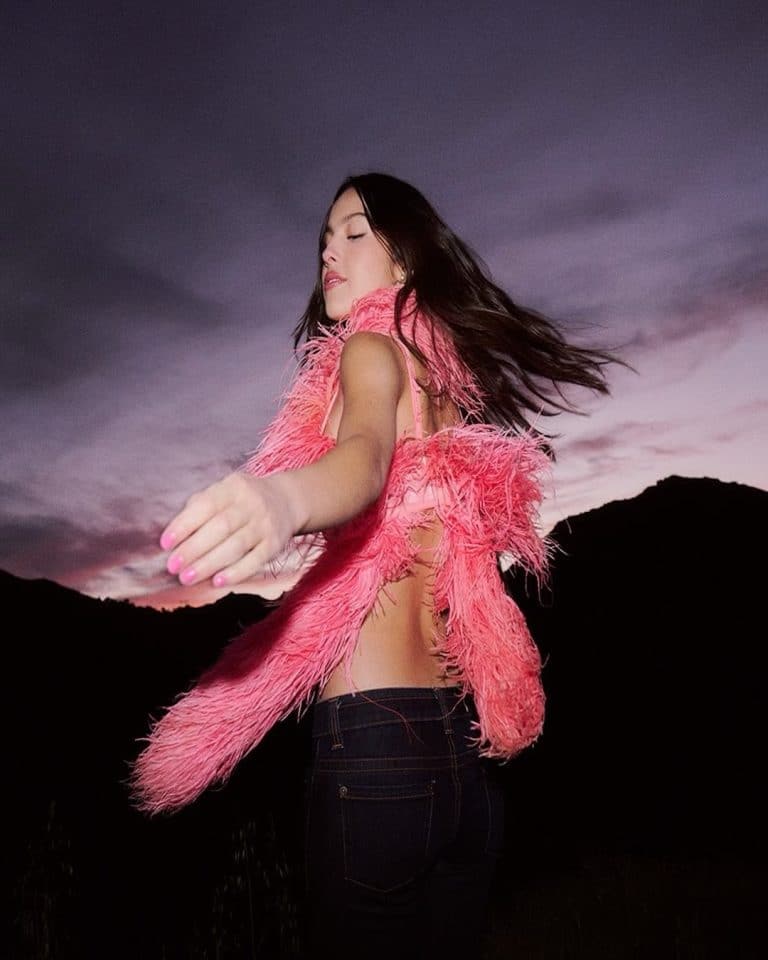
Sure, we edit the fashion and celebrity shoots you see in these pages (the clamps and sandbags that secured our white paper set so it wouldn’t accidentally topple onto our model were photoshopped away), but our creative process is still human. We forecast trends, style fits and hair and makeup, scout locations, shoot images and design layouts, all in the hope of inspiring you to express yourself in a way that feels authentic.
And now? Brands are using AI to create images to sell fake clothes (even though they are based on real pieces, the way they look on you would never be the same) on fake models (if you’re reading this and really do have seven fingers, my apologies) in fake locations (it’s giving Uncanny Valley).

So why does this all really matter? We’re just talking jeans after all <hearing my fashion team collectively gasp>. Because, as it turns out, the ability to *create* might be the most human thing we do.
For the past eight years, Georgetown University neuroscientist Dr. Adam Green and his team have reviewed the essays of more than 370,000 students. After the onset of ChatGPT, the researchers noticed a shift: While the projects were technically polished, they lacked truly creative ideas, instead relying heavily on a lot of the same constructs. The student-written essays that didn’t use bots? They offered up eight times more new ideas.
In short? AI is making us all sound the same, separating our original thoughts and personality from our creative efforts.
I’m not saying that AI can’t support the process (byeee, sandbags). I’m not saying AI is all bad (I happily surrendered my sense of direction to Google Maps long ago). But we need to hold on tightly to the creative ideas that make us human.
As we start a new school year, here’s my plea: Let AI fix your bad grammar, but draw the line at letting it guide your thought process.
Allow your mind to daydream. Observe what is actually around you, not what’s on your phone. Seek out experiences that fuel your soul. Ask big questions and pursue your passions—and embrace the risk of failing, even when there’s an easy way to make it “perfect.” See this year as an opportunity for genuine self-expression, not something you can outsource to a basic bot.
And yes, do it all wearing a really dope, human-curated outfit, found starting on page 14 of our August/September ’26 issue (get it here). You’re welcome.
Hey, girl! Just to let you know, this originally ran in our August/September 2026 issue. Read our print mag for *free* today when you click HERE!
Check out more reads, right here:
☀️ This teen girl is spreading hope through honey
☀️ EXCLUSIVE! Team Hyperpigmentation’s Minecraft victories put girlpower at the top of the leaderboard
☀️ What you need to know about the social media ban in Australia